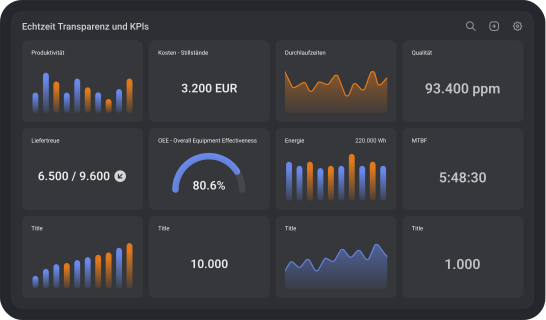

Digital Checklists
With SYMESTIC Digital Checklists, paper-based inspections are replaced by mobile, intelligent, and fully traceable workflows.
Every inspection result is captured in real time, enriched with photos and metadata, and stored in a tamper-proof digital archive.
The entire audit process becomes faster, cleaner and immediately actionable across all teams.
Why Paper-Based Checklists Fail in Modern Production
Paper creates delays, gaps and inconsistent data.
Handwritten notes get lost, transcription errors occur and results are often not available when decisions need to be made.
Information moves slowly, which means deviations are discovered too late and corrective actions lag behind.
Digital checklists eliminate these weaknesses.
All inspection data is captured at the source, structured automatically and available instantly — without manual transfers or risk of data loss.
SYMESTIC Digital Checklists: Mobile, Intelligent, Real-Time
SYMESTIC enables teams to perform inspections directly via smartphone or tablet.
Photos, timestamps and location data are added automatically.
Operators follow a clear, guided flow that ensures complete documentation and consistent audit quality.
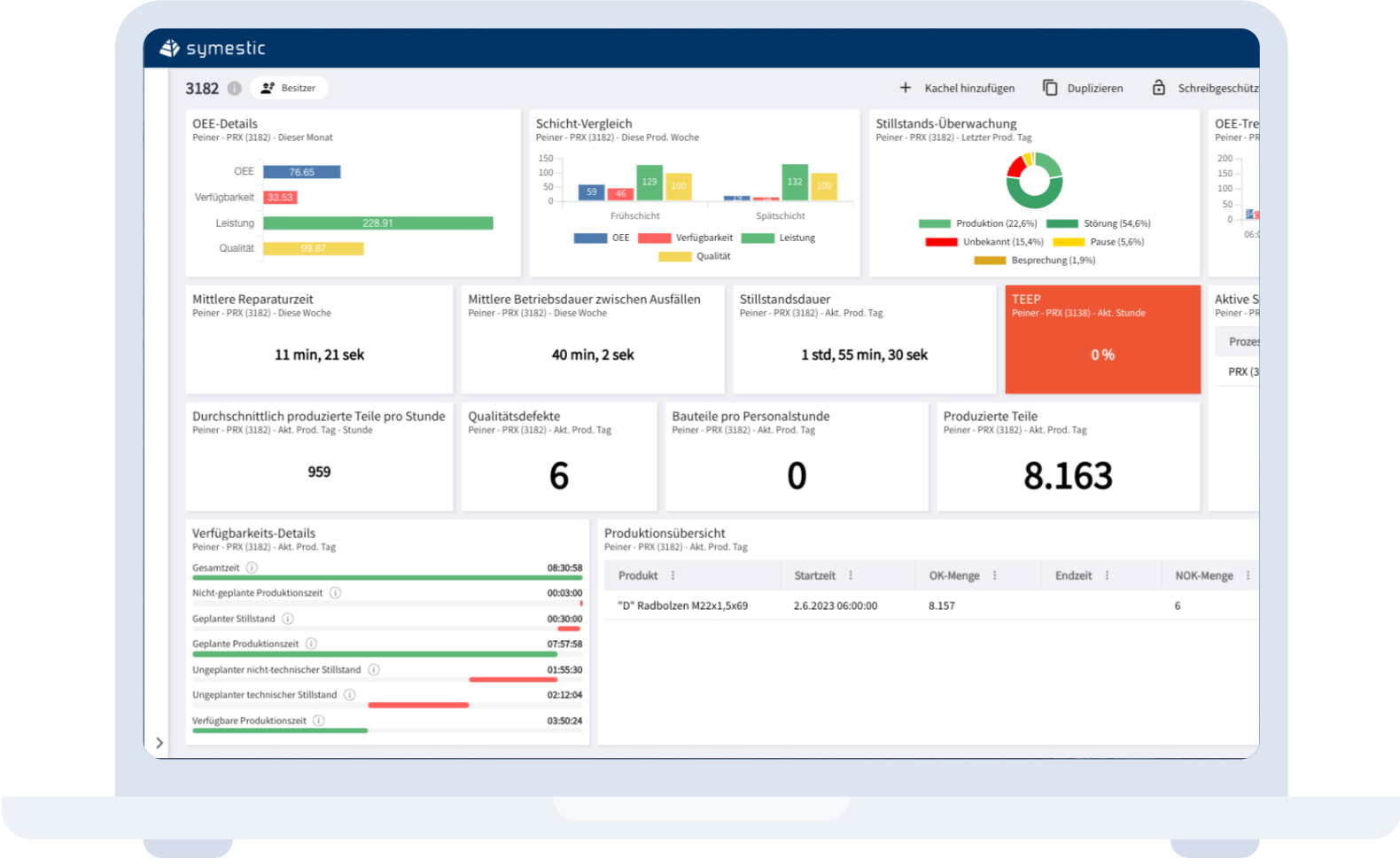
All results are synchronized in real time so quality managers, supervisors and maintenance teams always see the current status and can react immediately when abnormalities appear.
Automated Documentation and Evaluation
Every entry is stored securely and becomes part of a digital audit history.
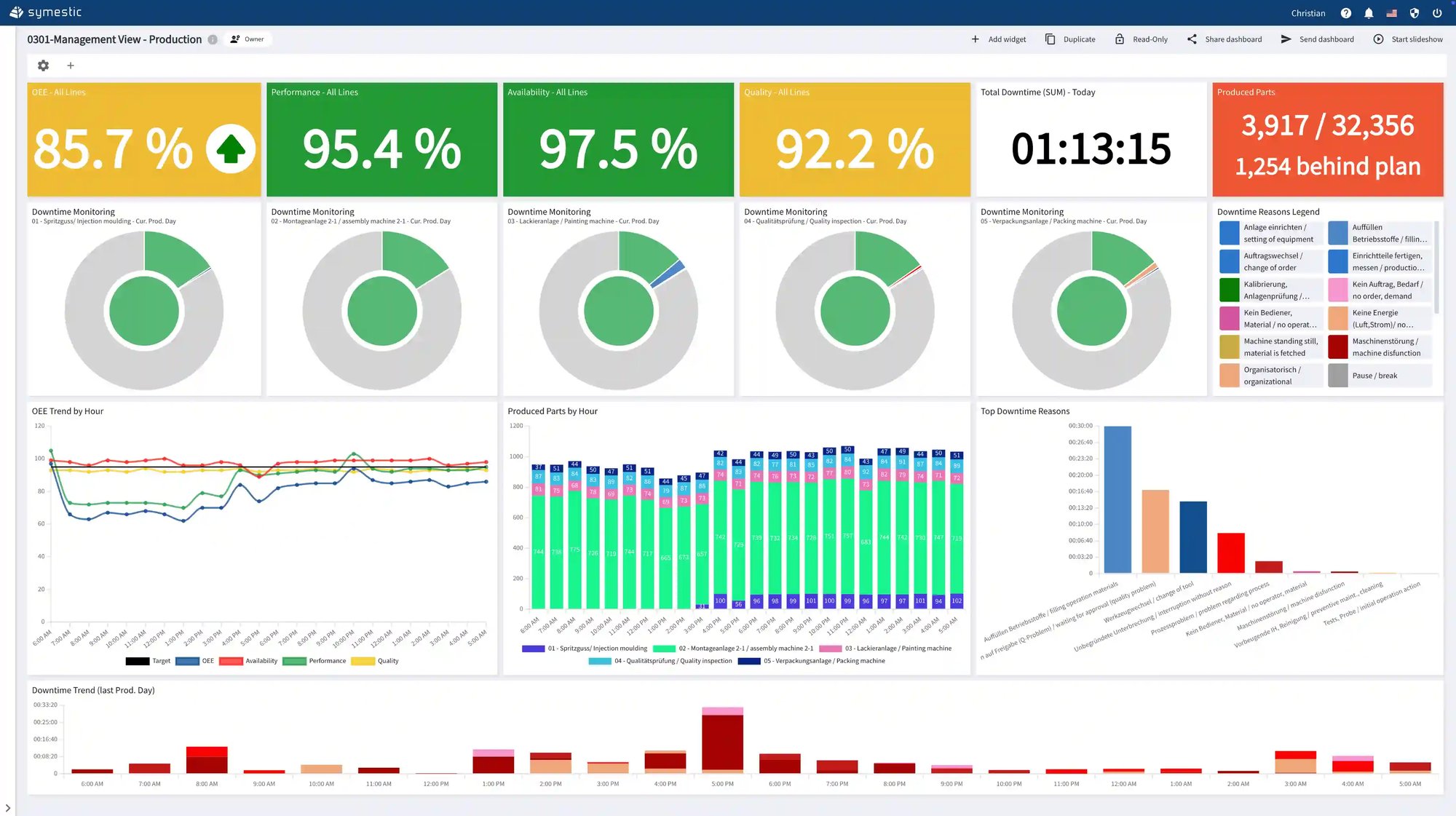
Insights, trends and deviations are visible without manual effort.
Critical findings trigger automatic notifications, allowing organizations to reduce risks and maintain compliance.
Instead of compiling reports manually, teams receive instant overviews that highlight issues and improvement potential — increasing process stability and reducing follow-up costs.
Flexible Checklist Management for All Areas
SYMESTIC supports inspections across quality, safety, maintenance and 5S processes.
Checklist templates can be created, adjusted or duplicated within minutes.
Role-based permissions ensure that workflows remain controlled and compliant.
This flexibility allows companies to standardize audits across sites while still adapting to specific production environments.
Try the software free for 30 days
Start digitizing your production today.