






MES Software: Vendors, Features & Costs Compared 2026
MES software compared: vendors, functions per VDI 5600, costs (cloud vs. on-premise) and implementation. Honest market overview 2026.

Summary: MES systems cost between $900/month (cloud-native SaaS) and over $250,000 upfront (on-premise), depending on architecture. The decisive difference is not the list price — it is the total cost of ownership: servers, consulting, maintenance, and internal IT effort triple the visible license cost of on-premise systems according to industry estimates. This article compares real total costs over three years, identifies the factors that drive MES pricing, and calculates ROI using concrete implementation data from manufacturers across four continents.
MES system costs vary dramatically by architecture: traditional on-premise systems require upfront investments of $120,000 to over $600,000 according to industry estimates. Cloud-native MES platforms like SYMESTIC start at $900/month for 5 machines — no server costs, no implementation consulting fees, no hidden charges.
The purchase price is only the visible tip. The actual total cost — the total cost of ownership (TCO) — breaks down into six cost blocks that differ significantly depending on architecture:
With a cloud-native MES like SYMESTIC, blocks 2, 3 (largely), 5, and 6 are eliminated entirely. The monthly SaaS fee includes hosting on Microsoft Azure, all updates, onboarding, customer success support, and technical remote support.
The following table compares the real costs of cloud-native MES and on-premise MES for a mid-sized manufacturer with one plant and 20–30 machines.
| Cost block | On-premise MES (traditional) | Cloud MES (SYMESTIC) |
| License / SaaS (year 1) | $35,000–$100,000 (one-time license) | From $900/month = from $10,800/year |
| Server hardware & database | $12,000–$30,000 | $0 (included in SaaS) |
| Implementation consulting | $60,000–$180,000 | $0 (onboarding included in price) |
| Initial training | $6,000–$18,000 | $0 (8–12 hrs onboarding included) |
| Machine connectivity | Project-dependent, often five figures | Standardized gateways, predictable |
| Maintenance (annual) | 20% of license = $7,000–$20,000/year | $0 (included in SaaS) |
| IT staff (internal, annual) | $18,000–$36,000/year (pro-rated) | $0 (no server operations required) |
| Updates & upgrades | Additional cost per major release | $0 (automatic, weekly) |
| TCO over 3 years* | $250,000–$500,000 | From approx. $35,000–$60,000 |
| Time-to-value | 6–18 months | Days to weeks |
| Cancellability | Sunk investment | Cancel monthly |
*On-premise cost ranges are based on our market experience from over 15,000 machine connections and implementation data from customers including Meleghy, Klocke, Brita, Carcoustics, and Neoperl. Actual costs vary by vendor, functional scope, and project structure. All figures in USD for international comparability.
The real cost difference between cloud MES and on-premise only becomes visible in a three-year comparison. For a single plant with 20–30 machines, on-premise MES runs $250,000–$500,000 in TCO according to industry estimates, while cloud-native MES costs a fraction of that — with a faster path to productive use.
On-premise — year 1: The cost chain starts with one-time licenses in the mid-five-figure range, followed by server hardware, database licenses, implementation consulting, and machine connectivity. Before the first machine is productively connected, our experience shows that $150,000–$300,000 is often already on the books.
On-premise — years 2 and 3: Annual maintenance fees (typically 20% of the license), IT staff cost for system administration, and potential additional costs for updates or feature extensions. Running costs alone typically amount to $30,000–$60,000 per year.
Cloud-native — all three years: Predictable monthly SaaS fees that include hosting, updates, support, and all feature expansions. No spikes, no surprises. Implementation is limited to machine connectivity via standardized gateways and platform configuration — no external consultants, no server projects.
The decisive difference is not just the absolute amount. A cloud MES delivers initial productivity data and optimization opportunities within weeks. An on-premise MES generates only costs during the first six months. This time-to-value difference fundamentally changes the ROI equation.
Four factors determine the actual price of an MES system: the number of machines, the number of plants, the required functional scope, and the complexity of machine connectivity. Depending on the MES architecture, these factors have very different cost implications.
Most MES vendors tier their pricing by machine segments or data points. With SYMESTIC, pricing scales linearly: companies start with a few machines and expand as needed — no new license package, no additional infrastructure project.
With on-premise systems, every additional plant means a separate server installation, separate licenses, and a separate implementation project. Costs multiply almost linearly.
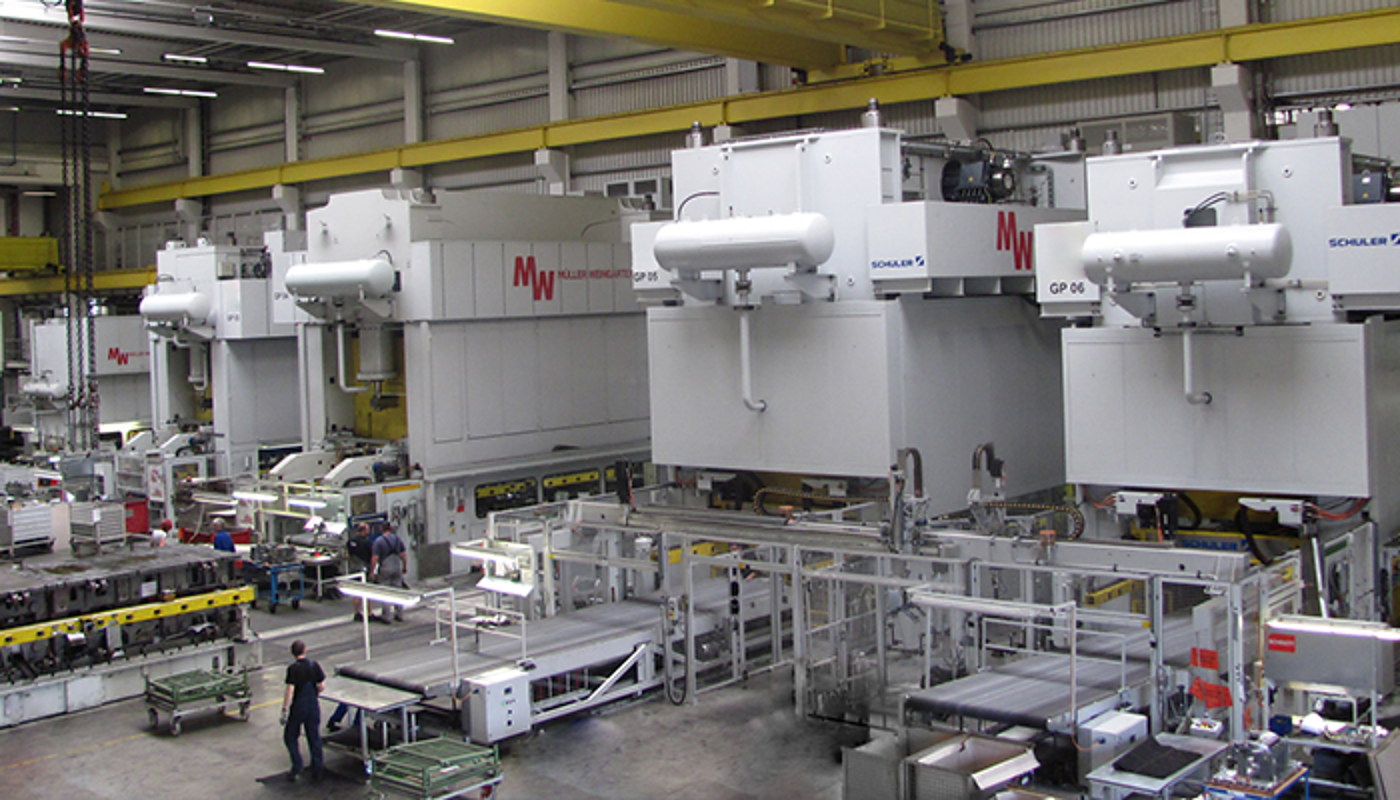
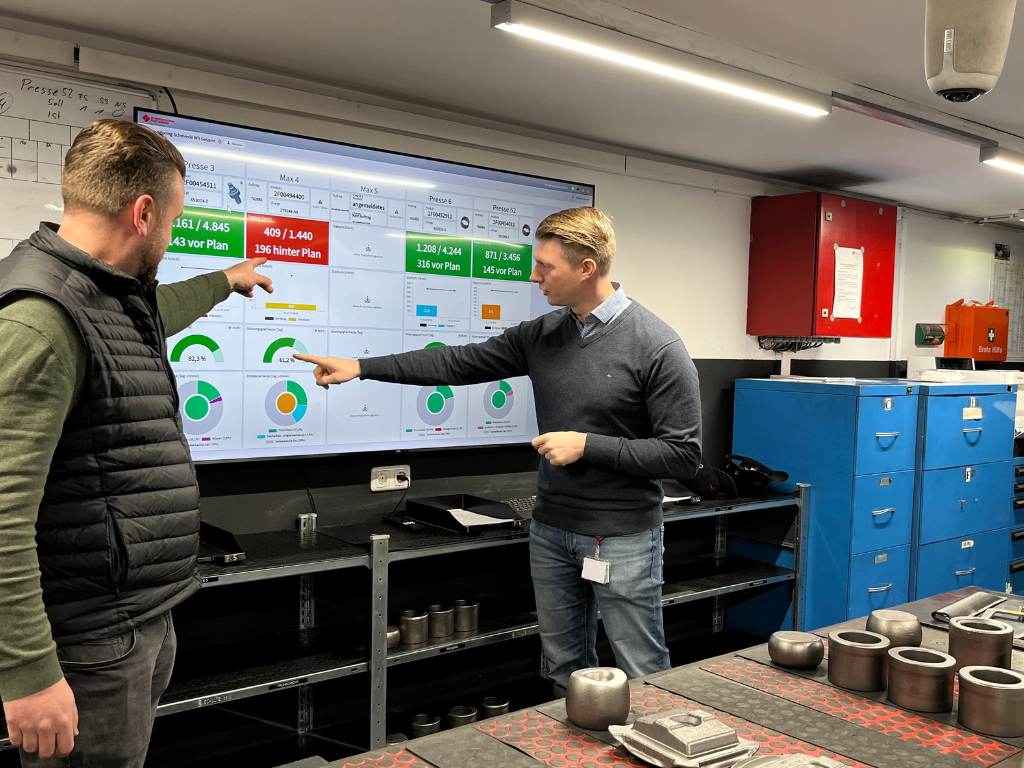
Cloud-native systems solve this: new plants are added within the existing platform and connected via gateways. Meleghy Automotive uses SYMESTIC across six plants (Germany, Czech Republic, Hungary) with over 300 segments — managed from a single platform. The rollout to all plants took six months.
Basic functions like machine data collection (MDC/PDC) and OEE calculation are priced lower than a full MES solution with production control, detailed scheduling, quality management, and ERP integration.
With SYMESTIC, all modules are included in the platform — there are no separate module licenses to purchase. Companies activate features when they need them, without renegotiating licenses.
Modern equipment with OPC UA interfaces can be connected in a few hours. Older legacy machines without digital interfaces require gateways for digital or analog signals — technically straightforward, but requiring somewhat more effort. SYMESTIC offers standardized solutions for both scenarios that work without modifying the machine's PLC.
SYMESTIC offers two package tiers: Professional for entry and operational use, Enterprise with a flat rate per plant for multi-site rollouts. All packages include unlimited users, dashboards, and shopfloor clients — no per-user surcharges.
| Feature | Professional | Enterprise |
| Unlimited users | ✓ | ✓ |
| Unlimited dashboards | ✓ | ✓ |
| Unlimited shopfloor clients | ✓ | ✓ |
| Standard analytics & reporting | ✓ | ✓ |
| Notifications & smartphone app | ✓ | ✓ |
| OPC UA cloud connector | ✓ | ✓ |
| REST API for ERP & third-party systems | ✓ | ✓ |
| Knowledge base access | ✓ | ✓ |
| Data retention | 12 months | Per regulatory requirements |
| Flat rate per plant | — | ✓ |
| Multi-site rollout | — | ✓ |
| Azure Active Directory | — | ✓ |
| Support | Standard | Priority |
| Onboarding (customer success) | 8 hours | 12 hours |
| Customer success (per year) | 12 hours | 20 hours |
Modules included in every package: MDC, PDC, KPIs, AI assistant, production control, machine alarms, process data, energy monitoring, quality, maintenance, personnel/headcount, shopfloor documents, and digital shift log. No separate module licenses.
Exact pricing depends on the number of segments and the selected package → Configure your monthly price or book a demo.
With a cloud MES like SYMESTIC, the typical ROI period is under six months. Klocke Group achieved measurable productivity gains of 12% within the first three weeks. What matters is not the MES price — it is the speed at which the system generates value.
The ROI calculation for an MES is driven by three levers:
Worked example: A plant with 20 machines and $120,000 monthly production output that achieves 5% higher output through an MES gains $6,000/month in additional production value. At SaaS costs of $900–$1,800/month, the investment produces a positive contribution from month one. With on-premise at a six-figure upfront investment, it takes significantly longer for the same lever to recover the investment — and that assumes the system is even productive by that point.
Results from actual SYMESTIC implementations:
| Customer | Implementation time | Downtime | Output | Availability |
| Meleghy Automotive | 6 months (6 plants) | −10% | +7% | +5% |
| Klocke Group | 3 weeks (1 site) | — | +12% | +8% |
| Carcoustics | 6 months (500+ machines) | −4% | +3% | +8% |
| Neoperl | PoC → rollout | −10% | +15% productivity | +8% |
| Brita | 1 year (2 plants) | −5% | +7% | +3% |
The biggest concern with an MES investment is not the price — it is the risk that the system does not deliver what it promises. A proof of value on a single line delivers measurable results within weeks and substantially reduces that risk.
Lengthy implementation projects with uncertain outcomes have caused many mid-sized manufacturers to delay or abandon MES deployments. That is understandable — with a six-figure upfront investment and 12 months of project duration, the risk is real.
The most pragmatic path: a limited pilot installation on a bottleneck area that delivers measurable results within weeks.
The key advantage of a cloud MES with this approach: if the proof of value does not deliver the expected results, there are no sunk costs. Monthly cancellability makes the investment decision reversible — a safety net that on-premise systems do not offer in this form. More on the implementation approach →
What does an MES system cost on average?
On-premise MES typically requires $120,000–$600,000 in upfront investment (licenses, servers, implementation consulting) according to industry estimates, plus 20% annual maintenance costs. Cloud-native MES platforms like SYMESTIC use monthly SaaS fees starting at $900/month and include hosting, updates, support, and all features without hidden surcharges.
What hidden costs come with MES systems?
With on-premise MES, the following costs are systematically underestimated based on our experience: server hardware and database licenses ($12,000–$30,000), implementation consulting ($60,000–$180,000), training, custom development, annual maintenance fees, and internal IT staff overhead for operations, backup, and updates ($18,000–$36,000/year). With cloud-native SaaS solutions, these costs are included in the monthly subscription.
How fast does an MES pay for itself?
With a cloud MES, the typical ROI period is under six months. Klocke Group achieved 12% higher output in the first three weeks, Neoperl reached 15% productivity gain. ROI depends less on the MES price than on time-to-value: cloud systems deliver initial optimization opportunities in days, on-premise systems typically require 6–18 months to reach productive use.
Can I test an MES before buying?
SYMESTIC offers a free 30-day trial with full functionality — start here. Beyond that, SYMESTIC provides a four-week evaluation where the system is tested with real machines and real production data. This allows you to reliably assess the value before making a long-term commitment.
What is included in the monthly MES price at SYMESTIC?
The SaaS fee includes: hosting on Microsoft Azure, all modules (MDC, PDC, KPIs, production control, quality, maintenance, energy monitoring, shift log, and more), unlimited users and dashboards, automatic updates, key user onboarding (8–12 hours), customer success support (12–20 hours/year), technical remote support, OPC UA cloud connector, and REST API for ERP integration. No servers, no maintenance fees, no module licenses.
How do I compare MES prices from different vendors fairly?
Always compare total cost of ownership over three years — not the list price. For on-premise quotes, add: license + servers + implementation + training + annual maintenance (typically 20% of license) + IT staff costs. For cloud quotes: monthly fee × 36 months + any setup costs. The MES vendor comparison breaks down differences by category.
Is an MES worth it for small manufacturers with fewer than 10 machines?
Yes, if the machines are highly automated and cost pressure exists. SYMESTIC enables entry with just a few machines and linear scaling. A company with 5 machines and 3% downtime reduction through real-time transparency typically saves more than the monthly SaaS fee costs. The barrier is not the price — it is the willingness to embrace data-driven decision making on the shop floor.
Do MES costs differ by region?
On-premise MES costs vary significantly by region due to differences in consulting rates, server infrastructure costs, and labor costs for internal IT. Cloud-native MES pricing is region-independent — SYMESTIC charges the same SaaS fee whether the plant is in Germany, the Czech Republic, or the United States. This makes budgeting for multi-site rollouts across countries predictable and eliminates regional cost surprises.