






MES Software: Vendors, Features & Costs Compared 2026
MES software compared: vendors, functions per VDI 5600, costs (cloud vs. on-premise) and implementation. Honest market overview 2026.
Material shortages are situations in which a production line lacks the raw materials, components, or consumables required to execute its scheduled orders on time. They manifest as starvation events on the shop floor: a line stops, slows, or switches to an unplanned product because the next box, coil, or pallet is not available at the workstation when the schedule called for it. Synonyms: material starvation, part shortage, Materialengpass, Materialmangel, Bestandslücke.
Material shortages sit at the ISA-95 Level-3/Level-4 boundary — where ERP planning meets MES execution. From building the SYMESTIC platform across 15,000+ connected machines in 18 countries, one pattern is consistent: most shortages are not supply-chain failures. They are data-synchronisation failures between ERP stock, WMS reality, and actual line consumption — and they become visible only once real-time consumption signals flow back from the machine.
Three terms that get used interchangeably in status meetings and completely wrongly on balance sheets. They cause different losses, trigger different escalations, and require different fixes.
Most operational pain labelled "supply chain" is actually a material shortage — internal, data-driven, fixable in the current shift if the right signal reaches the right person fast enough.
Across customer implementations, internal shortages cluster into five causes, and only one of them is a genuine external supply problem. ERP stock ≠ physical stock is the biggest: the ERP says 240 parts are available, the shelf has 180, because scrap postings lagged, a previous consumption wasn't booked, or inventory drift accumulated between cycle counts. Kitting and picking errors — wrong part, wrong quantity, wrong sequence — account for the next large slice, especially on high-mix lines. Unplanned consumption from scrap and rework silently drains inventory faster than MRP expects. Changeover and setup losses consume material that was never planned in the BOM. Only last comes genuine external supply failure — late truck, quality reject at incoming inspection, supplier short-ship. This matters because the first four are solvable with better data flow from the MES back to the ERP; the fifth is solvable only with procurement strategy.
The visible cost — the stopped line — is rarely the biggest one. A discrete-manufacturing line losing 30 minutes to material starvation typically burns €1,000–€7,500 in contribution margin, depending on part value and nameplate rate. The hidden multipliers are larger. Rescheduled orders cascade downstream: one order slipping by half a shift creates three late orders next shift. Premium freight to recover from the shortage — air freight, expedited trucking, direct-to-line courier — runs 3–10× standard logistics cost. JIT customers trigger line-down penalties into five and six figures per hour. And the compounding effect is operational: when material shortages become frequent, operators and planners build informal "hidden stock" on the line, inflating working capital and hiding the real problem. The Aberdeen benchmark of 3–5% of revenue lost to material-related production disruption is consistent with what we see in plants before MES-driven consumption tracking goes live.
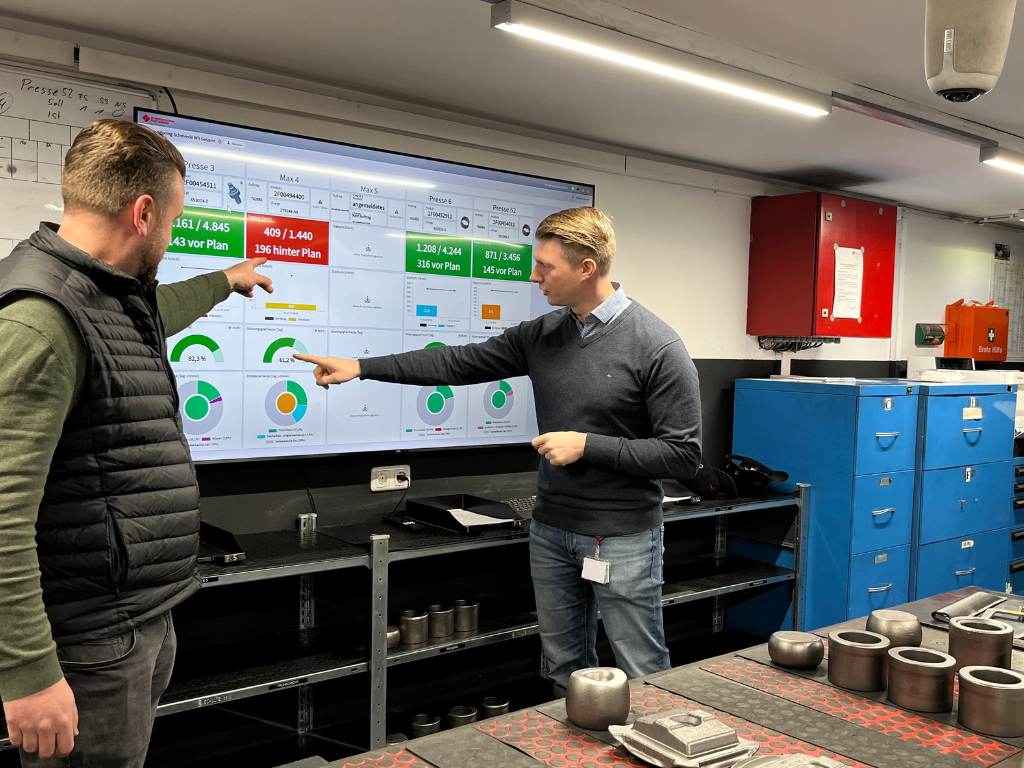
The architecture matters more than the feature list. A modern MES prevents shortages by closing three data loops that are broken in most plants. First, real-time consumption tracking: every produced cycle decrements BOM components against the active order, so the ERP's view of stock converges with physical reality within seconds instead of hours. Second, forward visibility on the schedule: the MES knows which orders run on which line in which sequence, so a shortage risk can be detected against the next 8–24 hours of planned demand, not against today's postings. Third, bidirectional ERP integration — via IDoc, REST, or OData — so reservations, back-flushes, and shortage alerts flow automatically without operators typing numbers twice. Meleghy runs exactly this pattern across six plants: SAP R3 releases orders, SYMESTIC consumes cycles against them, the back-flush posts automatically, and shortages are flagged on the line dashboard hours before planning would notice them. That is not an analytics feature. It is an architectural property of how the systems are connected.
Three KPIs that matter, and one that usually doesn't. Material-caused downtime as % of planned production time — captured automatically when your MES reason-code taxonomy separates "material" from "technical" stops. World-class is under 1%, mid-maturity 3–5%, troubled plants 8%+. Material availability at shift start — percentage of scheduled orders that have all required material confirmed present at the line before the shift begins. Under 95% guarantees chaos during the shift. Inventory accuracy — ERP stock vs. physical count, measured via cycle counting; below 97% accuracy makes MRP unreliable and shortages inevitable. The KPI that usually doesn't matter: "number of stockout incidents." It counts symptoms, not causes, and gets gamed by reclassifying stops. Always measure duration-weighted, never incident-count.
Hard-earned lesson from a Carcoustics brownfield rollout: A plant running 80 injection-moulding machines insisted their ERP inventory was accurate and that frequent material shortages were a supplier problem. In the first 30 days after wiring the SYMESTIC MES back into SAP R3 via ABAP IDoc, automatic back-flushing revealed that ERP stock for one critical resin overstated reality by 14% — roughly four days of production — because granule loss during changeovers had never been booked against orders. The "supplier problem" disappeared the same month we fixed the consumption signal. No supplier change, no safety-stock increase, no premium freight. The fix was closing a data loop between the machine and the ERP that had been open for years. Principle: before escalating material shortages to procurement, verify your ERP and your shop floor are telling the same story. Most of the time they are not.
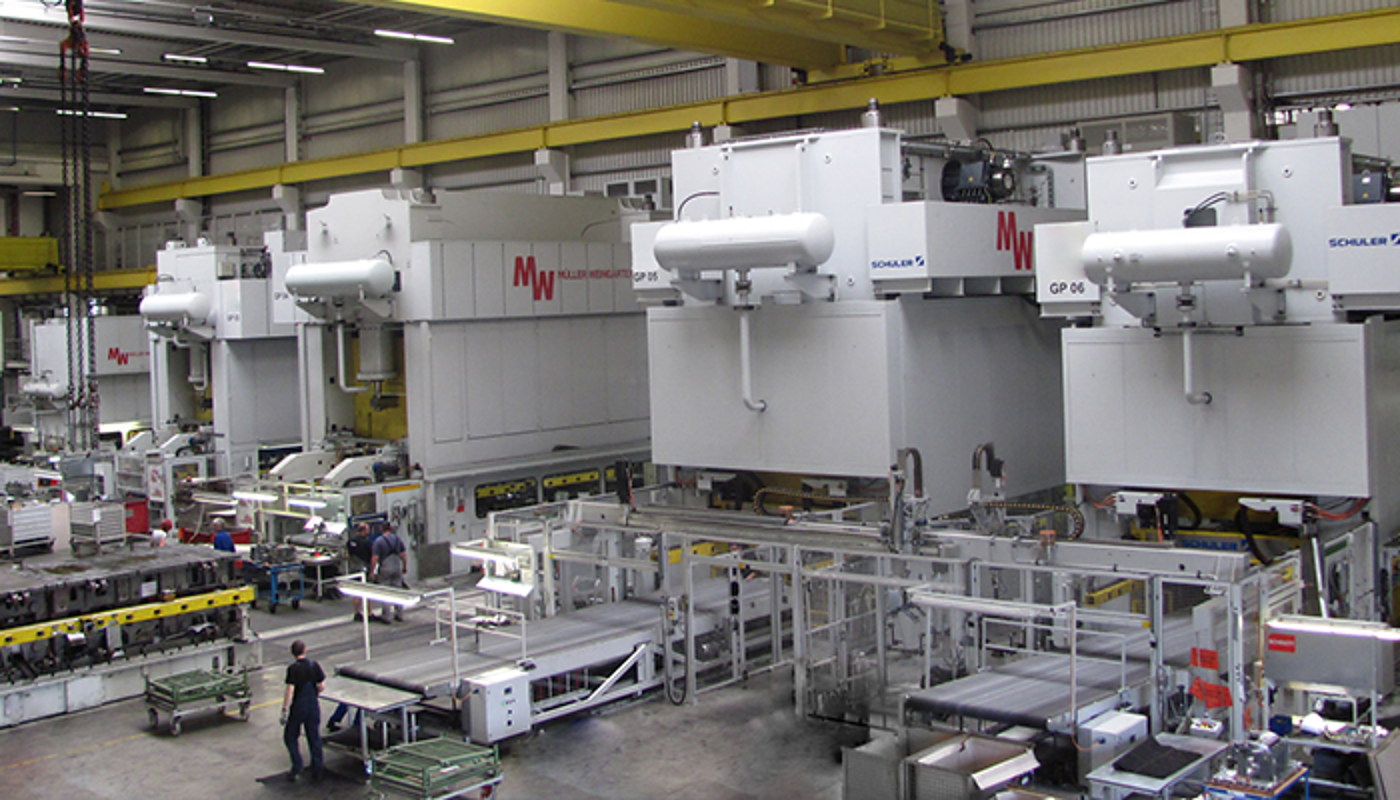
Across 15,000+ connected machines in 18 countries, the shortage-prevention pattern is architectural, not procedural. Meleghy (six plants, automotive) runs bidirectional SAP R3 integration via ABAP IDoc — machine cycles map to production orders, consumption posts back automatically, and planners see shortage risk hours earlier than before. Carcoustics (500+ machines, seven countries) pushes the same pattern over MQTT through IXON IoT gateways into Azure, with corporate-wide material-flow dashboards. Schmiedetechnik Plettenberg uses the InforCOM ERP connector so every forging cycle reconciles to the open order in real time, with no manual reporting. Klocke extended its Navision interface to include consumption events across all Weingarten packaging lines. The common denominator: once the MES closes the consumption loop automatically, "material shortages" stop being a weekly crisis and become an edge case. 4% downtime reduction at Carcoustics and 10% at Meleghy both trace a significant share back to material-flow visibility that previously did not exist.
Are material shortages a supply chain problem or an internal problem?
Both, but in most plants the internal share is larger than assumed. Supply-chain disruptions cause the structural shortages (weeks to months, procurement-level). Data-synchronisation gaps between ERP, WMS and MES cause the operational shortages (hours to days, shop-floor level). Audit real-time consumption accuracy before escalating to suppliers — the ratio is usually 70/30 internal/external.
Can safety stock solve material shortages?
Partially, and expensively. Safety stock masks the real problem (broken data loops between ERP and MES) by holding capital on the shelf. It prevents the worst stops, but it doesn't make shortages rarer — it just moves the cost from downtime to inventory carrying. Real prevention is data accuracy plus a responsive kanban, not more warehouse space.
How is MRP different from MES when it comes to shortage prevention?
MRP plans material flow based on forecast demand and BOM explosions — it runs in the ERP, typically nightly or weekly. MES executes against that plan in real time and reports actual consumption back. MRP tells you what should happen; MES tells you what is happening. Shortages happen in the gap between them. Closing that gap is the job of MES–ERP integration.
What role does kanban play in modern material-shortage prevention?
Kanban is the operational layer that keeps material flowing at the line when ERP accuracy is imperfect (which is always). Electronic kanban triggered by MES consumption signals combines the reliability of pull with the visibility of a digital system. Paper kanban cards still work — they just can't be aggregated into shortage analytics across plants.
How long does it take to reduce material-caused downtime meaningfully?
First measurable improvement within 4–8 weeks once real-time consumption tracking is live and reason-codes separate material stops from technical ones. A 50% reduction in material-caused downtime within the first year is typical when the starting point is a plant without back-flush automation. The slow part is always ERP integration alignment, not the MES itself.
Can a plant without a WMS still prevent material shortages with an MES?
Yes, though the effect is smaller. Without a WMS the MES tracks consumption accurately but relies on ERP or manual stock data for upstream visibility. Plants with both (MES + WMS + ERP all synchronised) achieve the lowest shortage rates. Plants with only an MES + ERP still see significant improvement because most shortages originate at the consumption interface, which the MES covers directly.
Do material shortages affect OEE?
Directly, and heavily. Material-caused stops are Availability losses in the OEE calculation. A plant with 5% material-related downtime is capped at 95% Availability before performance and quality losses are even considered. Reducing material shortages is often the single largest OEE lever a plant can pull, because unlike technical failures it doesn't require capital equipment changes.
How does SYMESTIC prevent material shortages?
SYMESTIC's Azure-native MES ties every machine cycle to an active production order via OPC UA, MQTT or digital I/O gateways, back-flushes BOM components against the order in real time, and synchronises with ERP systems (SAP R3, Navision, InforCOM and others) through bidirectional interfaces. Shortages surface on live Production Metrics dashboards before they stop the line, and the Production Control module flags missing components against the next 24 hours of scheduled orders.
Related: MES · OEE · Machine Downtime · MRP · Kanban · Just-in-Time · Bill of Materials · Production Control · Production Planning · Production Metrics.